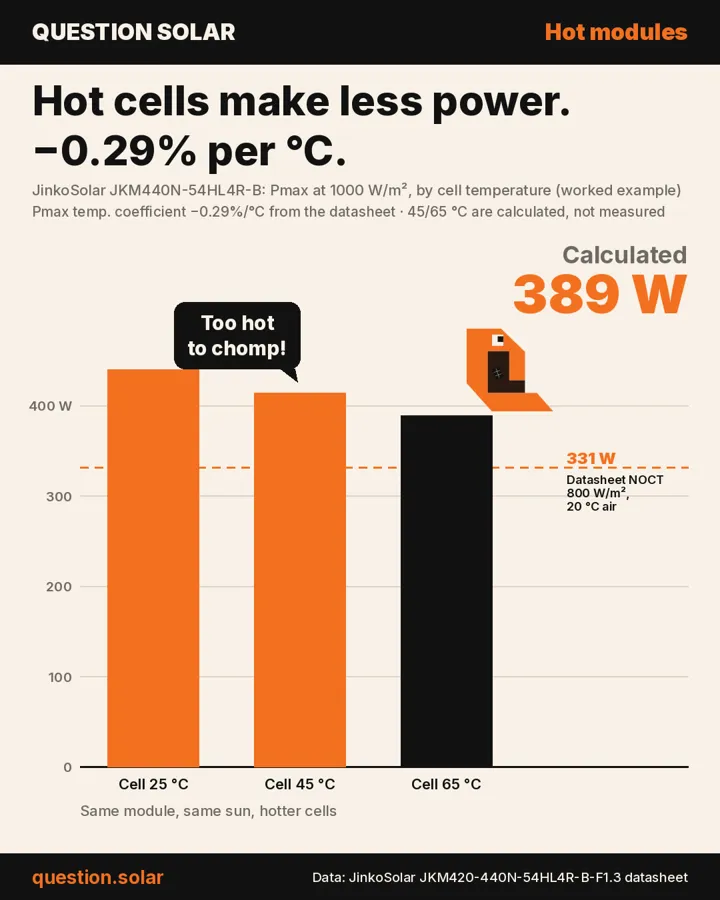
Hot roof, fewer watts
The label says 440 W. The July roof says about 389 W. Not broken, just hot: at −0.29 %/°C, cells at 65 °C lose around 11.6 %.

PVDIS
Short, practical notes on solar modules and supply in Europe. Written by the PVDIS team.
Every post gets its own short article here. Each card links to the article and to the post on LinkedIn.
The label says 440 W. The July roof says about 389 W. Not broken, just hot: at −0.29 %/°C, cells at 65 °C lose around 11.6 %.
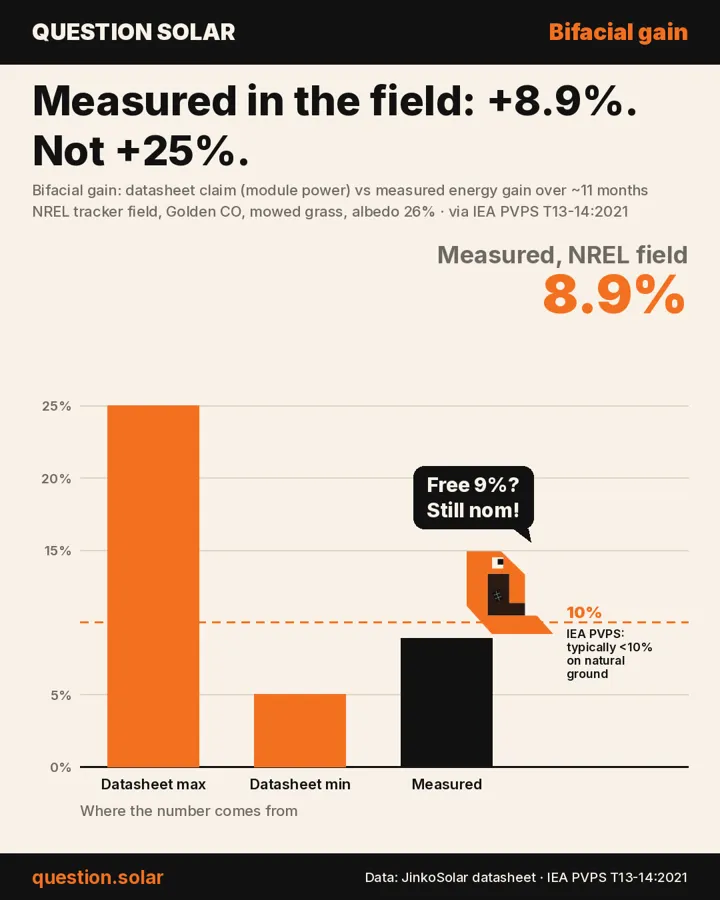
The datasheet says +25 %. Measured in the field: +8.9 %. A real gain, just not 25 %.
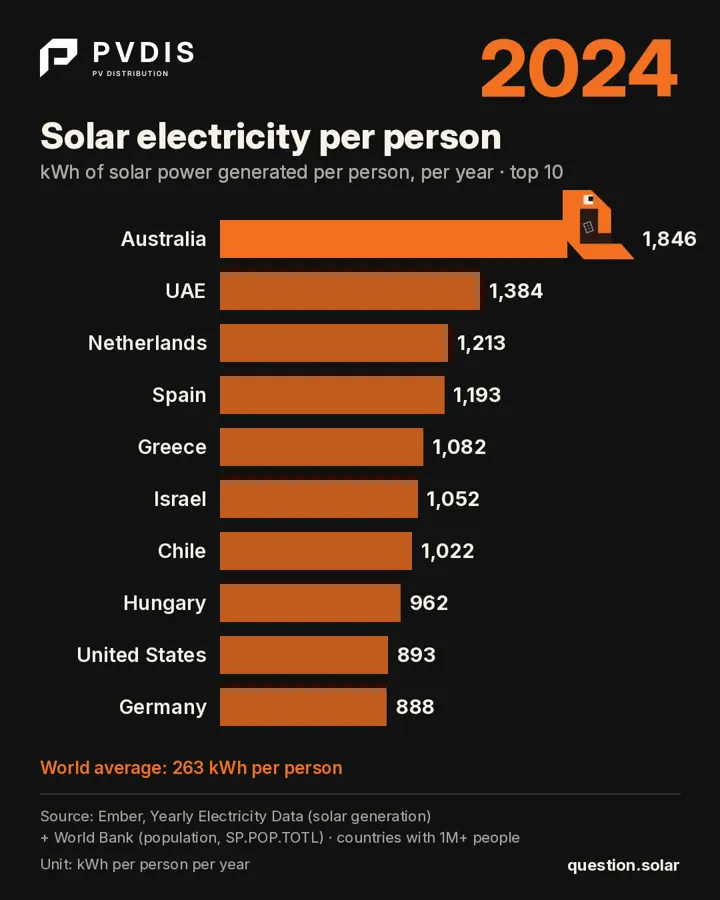
Capacity shows what is installed. Generation shows what it delivers. World average 2024: 263 kWh per person, up from 27 in 2014.
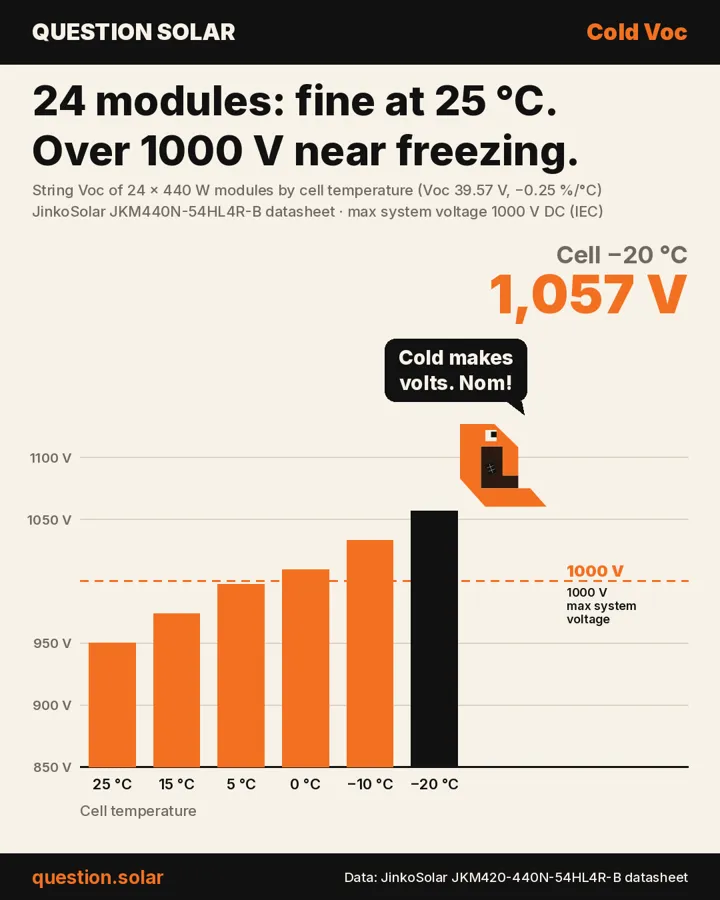
24 modules are fine at 25 °C, but over 1000 V near freezing. Design the string on its coldest-day open-circuit voltage.
Got a solar question? Modules, inverters, storage, sizing, winter yield. From professionals, for professionals.
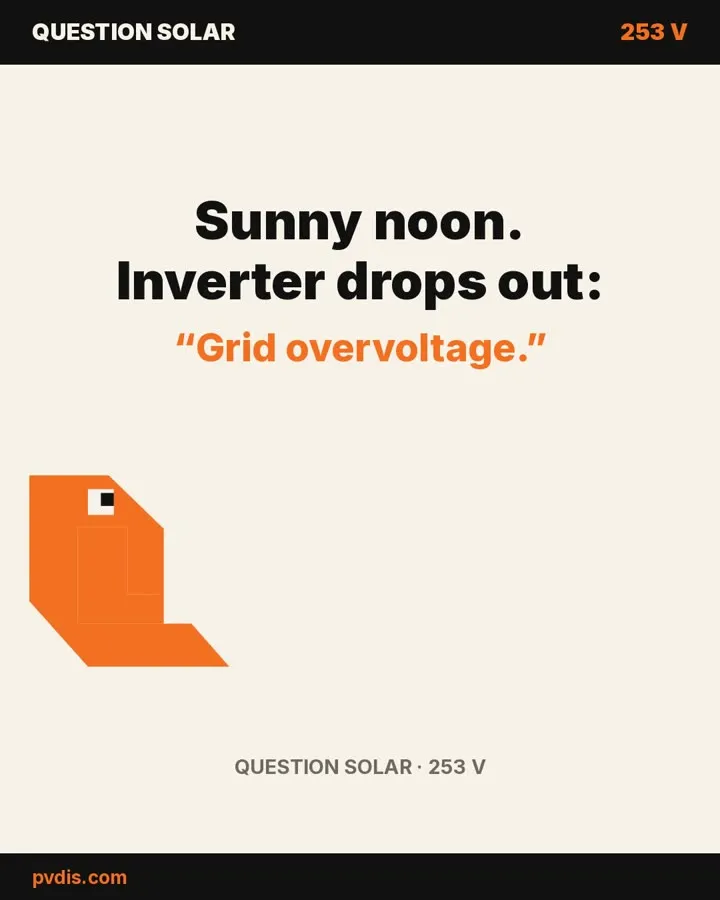
Is the inverter the problem? Usually it’s the street. Log the voltage at the meter, then talk to the grid operator.
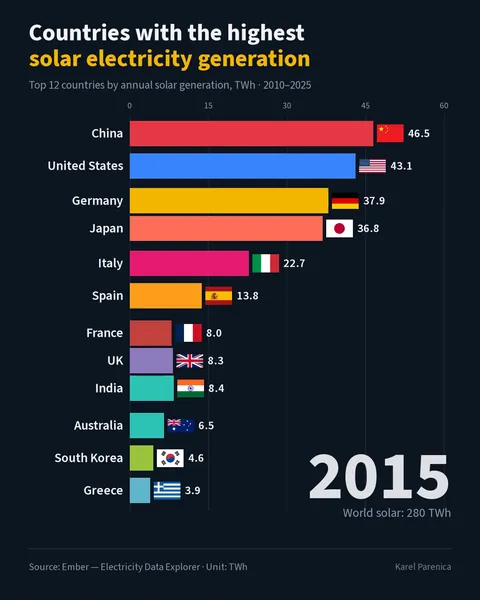
PVDIS reshare of the solar race video: the power race in 30 seconds.
LinkedIn post analytics, read 3 Nov 2026
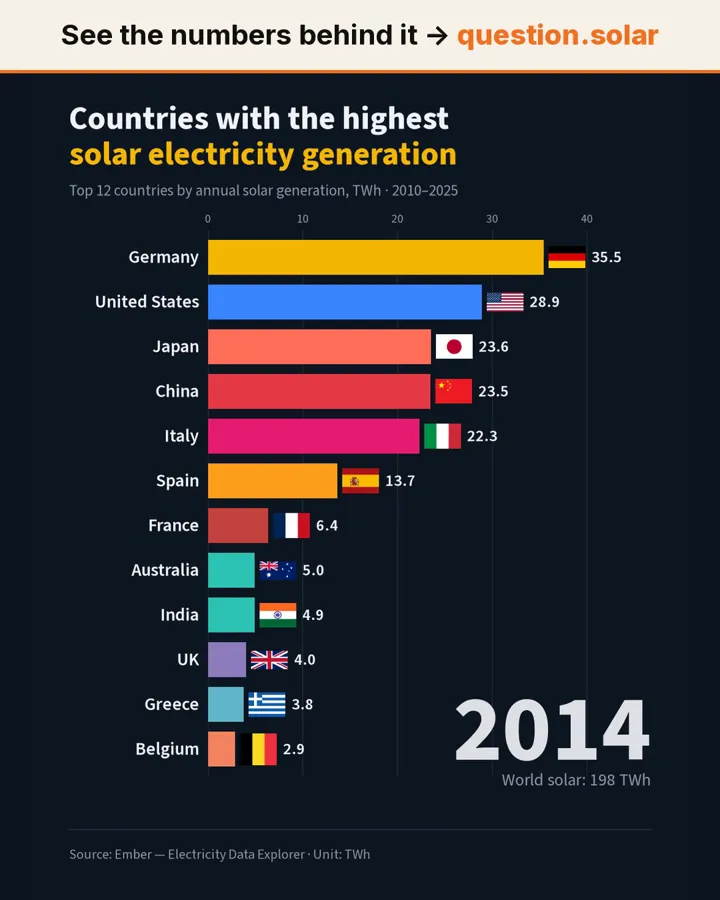
Real generation data, year by year. Solar didn’t win the argument. It won on price. Winter is still real, so we plan solar plus storage.
Broken? Not necessarily. Modules sit in parallel, so insulation resistance divides across the array.
A small arcade break from the PVDIS team, playable in the browser.
Translation of: Wet morning, inverter won’t start: low insulation
Translation of: Wet morning, inverter won’t start: low insulation
Translation of: Wet morning, inverter won’t start: low insulation
Translation of: Wet morning, inverter won’t start: low insulation
Translation of: Wet morning, inverter won’t start: low insulation
Five calm habits that help installers handle the next market swing.
Solar won on price, and per person Australia leads: the two stories, with LinkedIn's own numbers as of 3 Nov 2026.
First articles coming soon.